
How to stay warm and safe if you’re stuck in a car during a winter storm
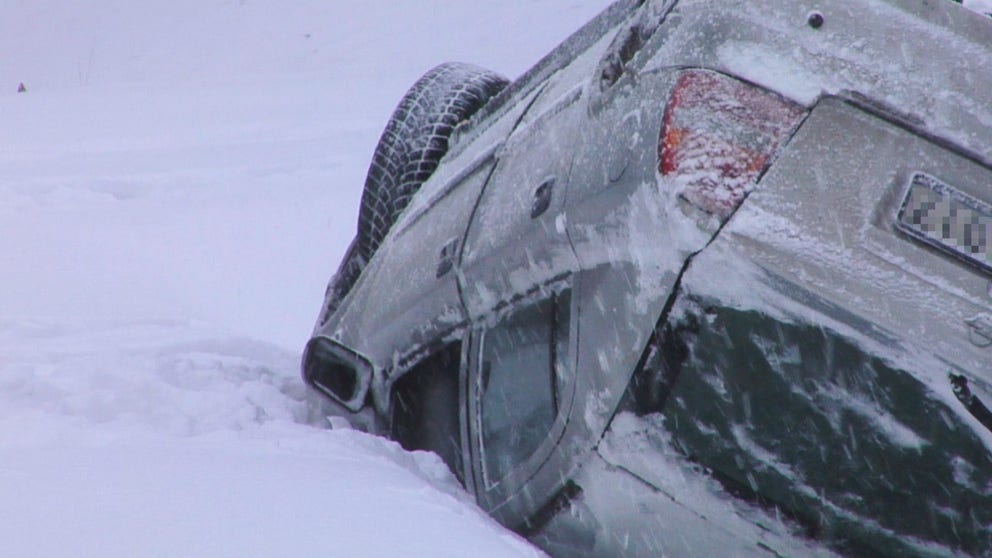
Being involved in a crash can be scary for everyone involved—here’s what to do to make the incident less stressful.
The winter weather can pose life-threatening risks whether you are indoors or outdoors.
Snowstorms can come at any time during the winter season, even at their worst, when you are traveling on the road, where nasty weather can cause unsafe road conditions.
It is essential to check the latest weather reports in your area ahead of time to decide whether driving is worth the risk.
WINTER TRAVEL CAR KIT: CHECKLIST OF EMERGENCY ESSENTIALS TO KEEP IN YOUR CAR IN CASE YOU GET STUCK
You should always inform family or friends if you decide to travel, so if something happens, they will know where to look.
According to the National Weather Service (NWS), more than 5,000 deaths occur on roadways every year due to weather conditions.
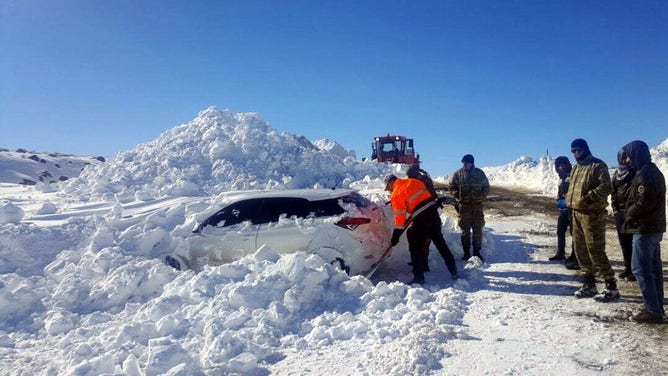
DIYARBAKIR, TURKEY – FEBRUARY 1: A car covered with snow is stuck in Diyarbakir, Turkey on February 2, 2017. 4 people who stuck in the car have been rescued after 14 hour by search and rescue teams. (Photo by 9th Regional Directorate of Highways/Anadolu Agency/Getty Images)
(9th Regional Directorate of Highways/Anadolu Agency / Getty Images)
If you’re having trouble with visibility and can’t see due to the heavy snow, pull over to the side of the road until conditions improve.
What to do if stranded in a car during a snowstorm
Experts at the NWS suggest the following tips to ensure you stay safe and warm if stuck in your car during a winter storm:
- Run the motor about 10 minutes each hour for heat.
- Open the window a little for fresh air to avoid carbon monoxide poisoning.
- Make sure the exhaust pipe is not blocked.
- Exercise from time to time by vigorously moving arms, legs, fingers and toes to keep blood circulating and to keep warm.
- Make yourself visible to rescuers by:Turning on the dome light at night when running the engine.Tying a colored cloth (preferably red) to your antenna or door.Raising the hood indicating trouble after snow stops falling.
- Turning on the dome light at night when running the engine.
- Tying a colored cloth (preferably red) to your antenna or door.
- Raising the hood indicating trouble after snow stops falling.
This will help mitigate cold-related hazards such as frostbite, hypothermia and wind chill.
WHAT IS HYPOTHERMIA AND WHAT CAN YOU DO TO PREVENT IT?
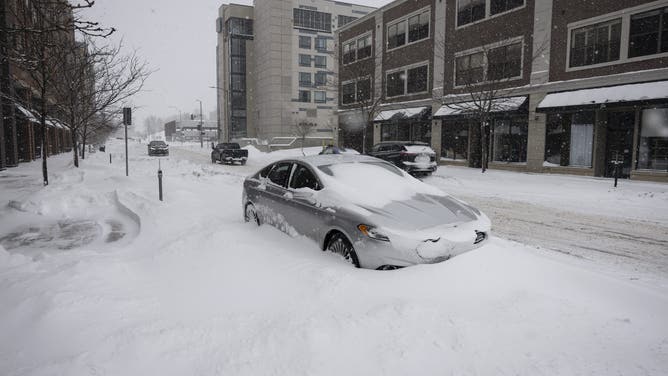
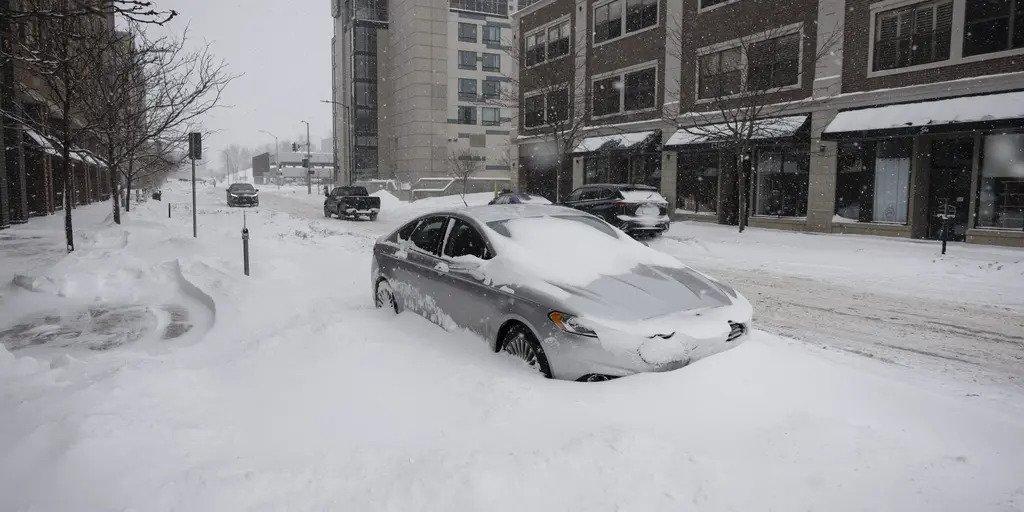
TOPSHOT – A car is buried in snow during a blizzard in the East Village neighborhood of Des Moines, Iowa, on January 12, 2024. Weather advisories were issued on January 12 as a powerful storm moved over the Plains and Midwest regions. The National Weather Service reports highs will not rise above 0F (-18C) degrees across Montana and North Dakota and high temperatures in the Central Plains states will reach around the 10s (-12F).
(Christian MONTERROSA / AFP / Getty Images)
Winter storm survival kit
Part of surviving in such a situation is always about preparation. Carrying a winter storm survival kit is a great way to ensure you’re covered with items, including:
- Blankets/sleeping bags.
- Flashlight with extra batteries.
- First-aid kit.
- Knife.
- High-calorie, non-perishable food.
- Extra clothing to keep dry.
- A large empty can and plastic cover with tissues and paper towels for sanitary purposes.
- A smaller can and waterproof matches to melt snow for drinking water.
- Sack of sand (or cat litter); shovel; windshield scraper and brush.
- Tool kit.
- Tow-rope.
- Booster cables.
- Water container.
- Compass and road maps.
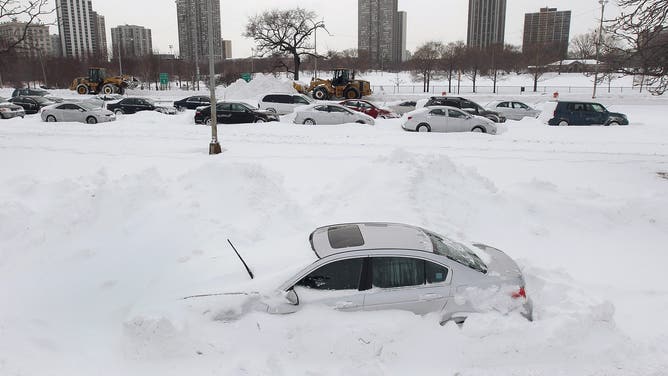
CHICAGO – FEBRUARY 02: A car sits facing the wrong direction on a ramp to Lake Shore Drive as cars in the northbound lanes (rear) of the Drive sit stranded after the road was rendered impassible by accidents and deep snow during last night’s blizzard February 2, 2011 in Chicago, Illinois. As of late morning over 20 inches of snow had fallen, making this snowstorm the third largest recorded in the city.
(Scott Olson / Getty Images)
Experts at the NWS suggest running your car’s motor for 10 minutes every hour to generate heat. While running the motor, open the window a little to let in fresh air and avoid carbon monoxide poisoning.
Make sure to be visible to rescuers by turning on the dome lights at night when you run the engine. Also, tie a bright-colored cloth to the antenna or door to signal for help.
At the end of the day, surviving a winter storm in your vehicle comes down to using your time wisely for heat, gas and seeking help.
Being prepared before you leave by packing a kit and winterizing your car are your best chances to avoid deadly cold hazards.
Source link
editor's pick
latest video

Sports News To You
Subscribe to receive daily sports scores, hot takes, and breaking news!