Do you know what bombogenesis, FOX Weather has got you covered with the answers
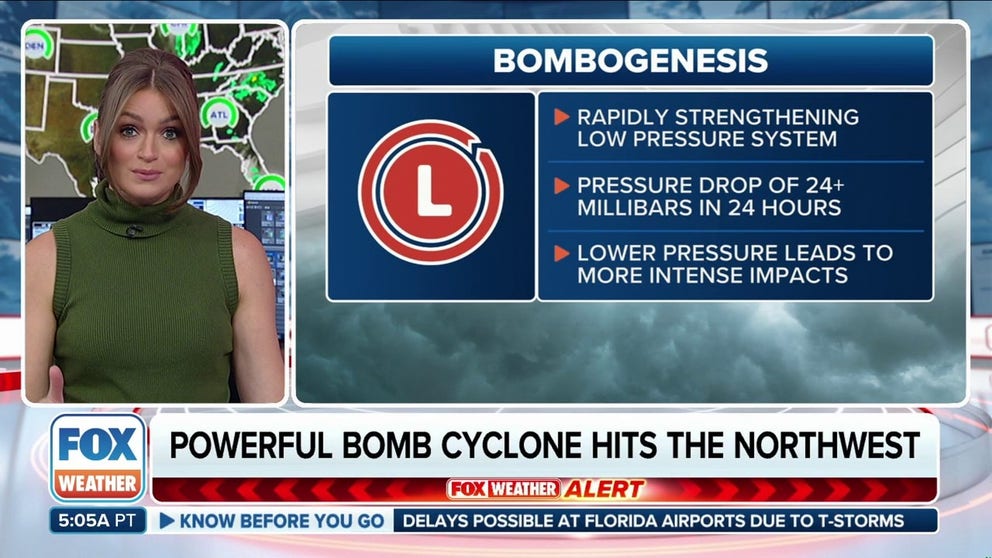
A powerful and deadly storm known as a bomb cyclone has been pounding the West Coast, including Washington State, but what exactly is a bomb cyclone? FOX Weather Meteorologist Britta Merwin explains. (Video recorded Nov. 20, 2024).
There are many forms of cyclones in the weather world that can create weather phenomena for meteorologists to study.
Bombogenesis is a unique type of cyclone. It’s different from tropical cyclones, which produce tornadoes.
The term “bomb cyclone” comes from the term “bombogenesis.” It’s a storm that intensifies rapidly and can create large impacts such as heavy snow, rain, high winds and coastal flooding.
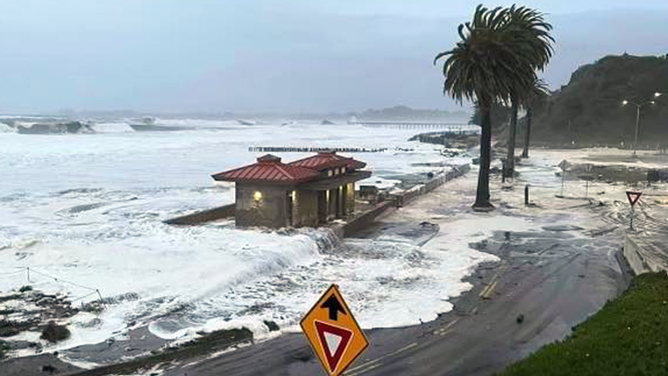
Flooding is seen in Santa Cruz County, California, during a powerful and deadly bomb cyclone.
(Santa Cruz County/Twitter / FOX Weather)
Bombogenesis is a popular term that describes a mid-latitude (the latitudes between the tropics and polar regions) cyclone that rapidly intensifies, according to the National Oceanic and Atmospheric Administration (NOAA).
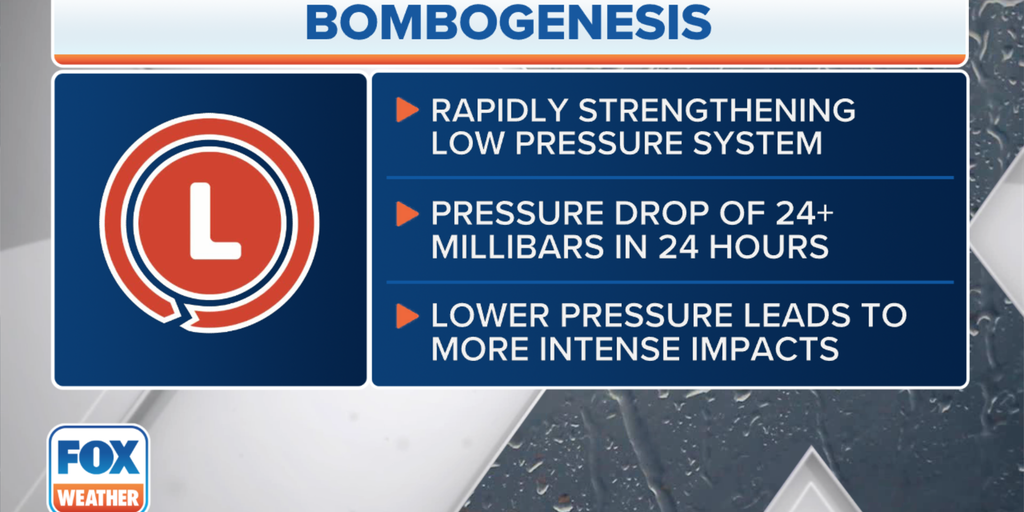
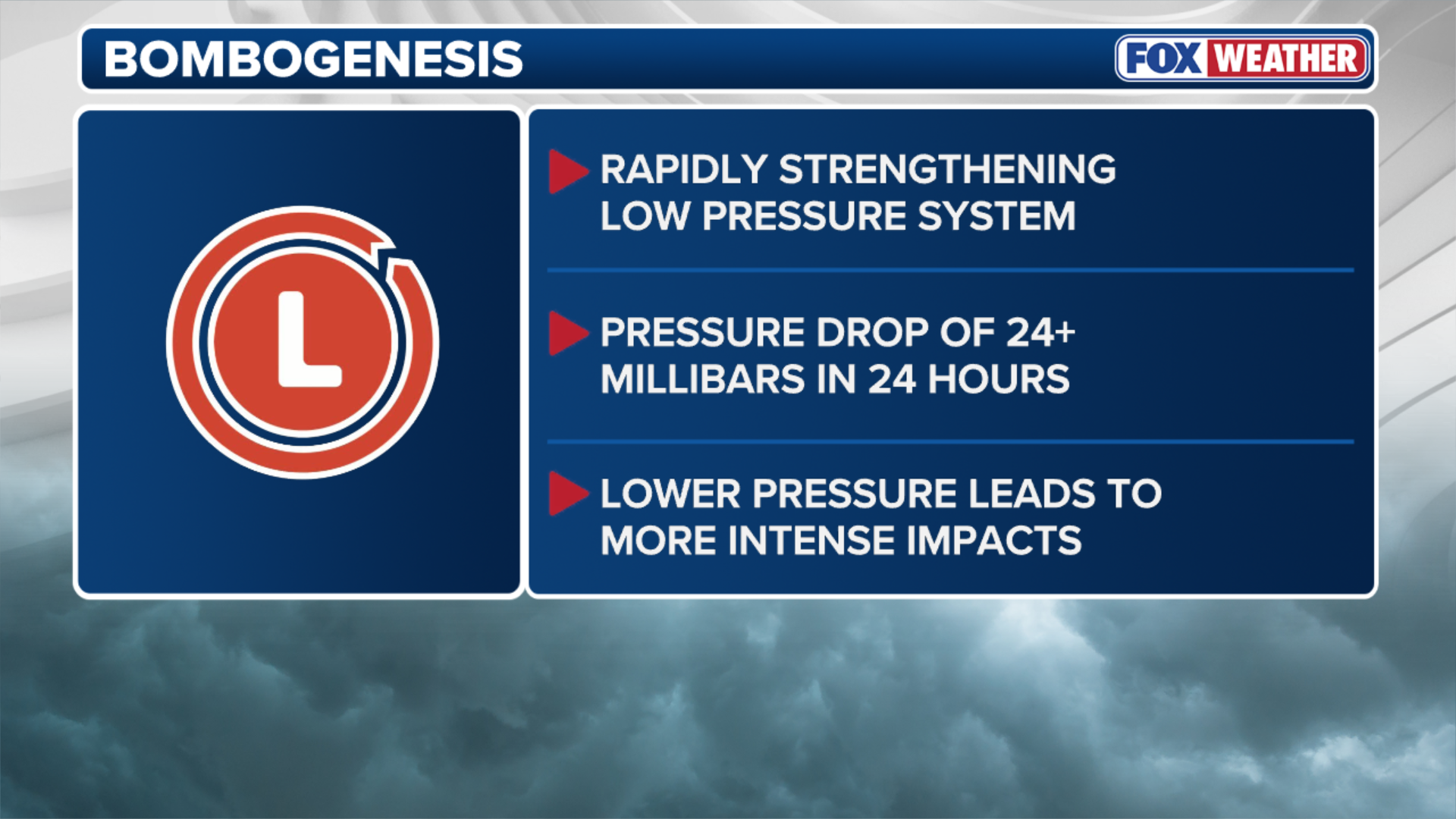
This occurs when a mid-latitude cyclone rapidly strengthens over 24 hours. A drop in millibars represents this intensification.
Classifying it as a bomb cyclone depends on the current latitude.
An example is at 60 degrees latitude, where there is a drop of at least 24 millibars (24 hectopascals) over 24 hours.
SEE IT: US COAST GUARD RESCUES THREE STRANDED DUCK HUNTERS IN DANGEROUS SEVERE WEATHER
“Bombogenesis can happen when a cold air mass collides with a warm air mass, such as air over warm ocean waters,” according to NOAA. “It is popularly referred to as a bomb cyclone.”
(FOX Weather)
The term “bomb cyclone” comes from the meteorological term “bombogenesis” or “explosive cyclogenesis.” This happens when a storm system’s central pressure drops at least 24 millibars within 24 hours.
Bomb cyclones are more common in the Pacific Ocean, but do happen in the Atlantic Ocean, or even over land. This storm would likely keep most of the eastern U.S. in a bitterly cold air mass.
HOW THE BIGGEST WAVES IN THE WORLD BREAK OFF THE COAST OF PORTUGAL
According to a study published in the Journal of Applied Meteorology and Climatology, 69% of bomb cyclone cases occur from December to February and early March.
Source link
editor's pick
latest video

Sports News To You
Subscribe to receive daily sports scores, hot takes, and breaking news!